Service 03 of 07 · Scottsdale, AZ
Tub to Shower Conversion in Scottsdale, AZ
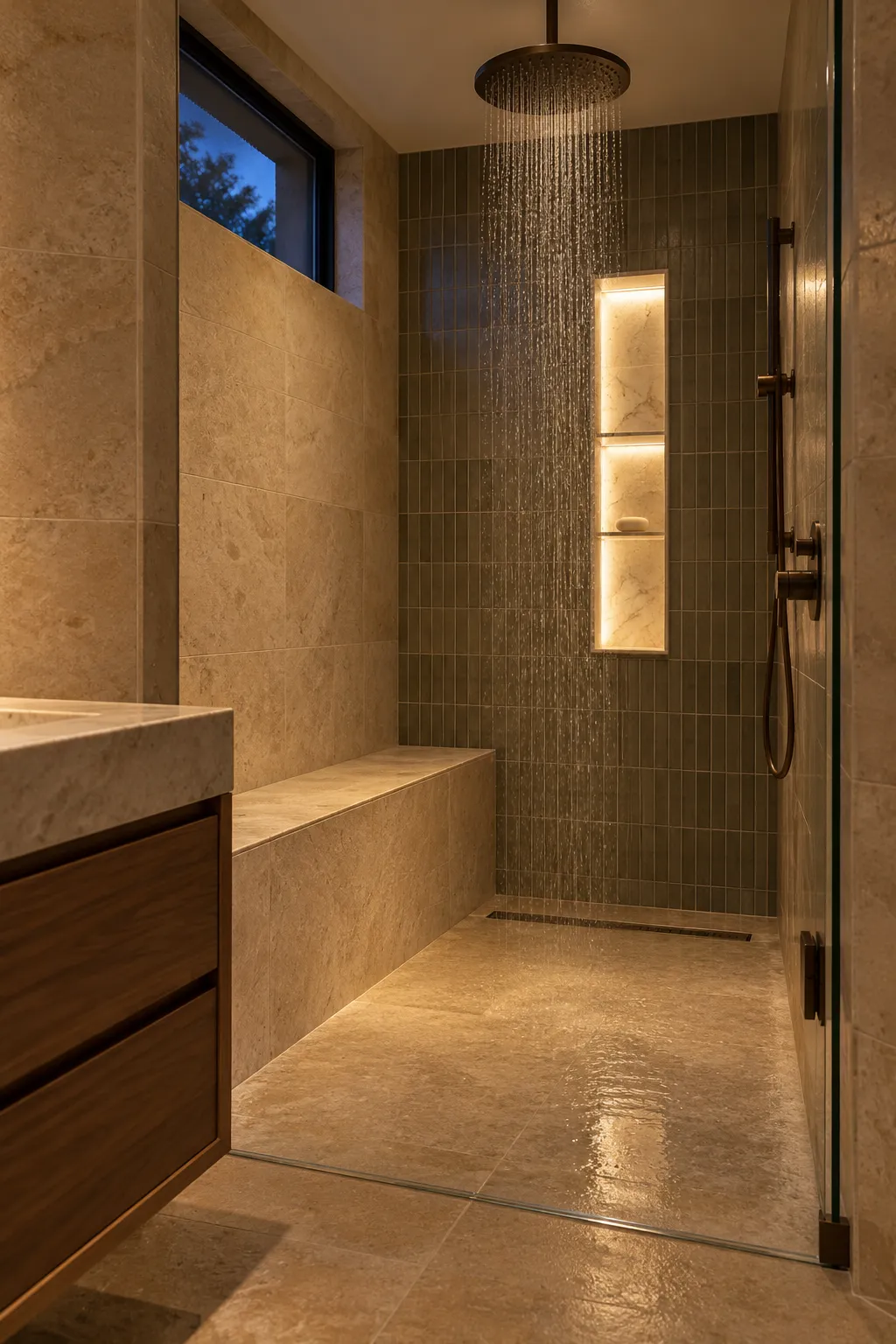
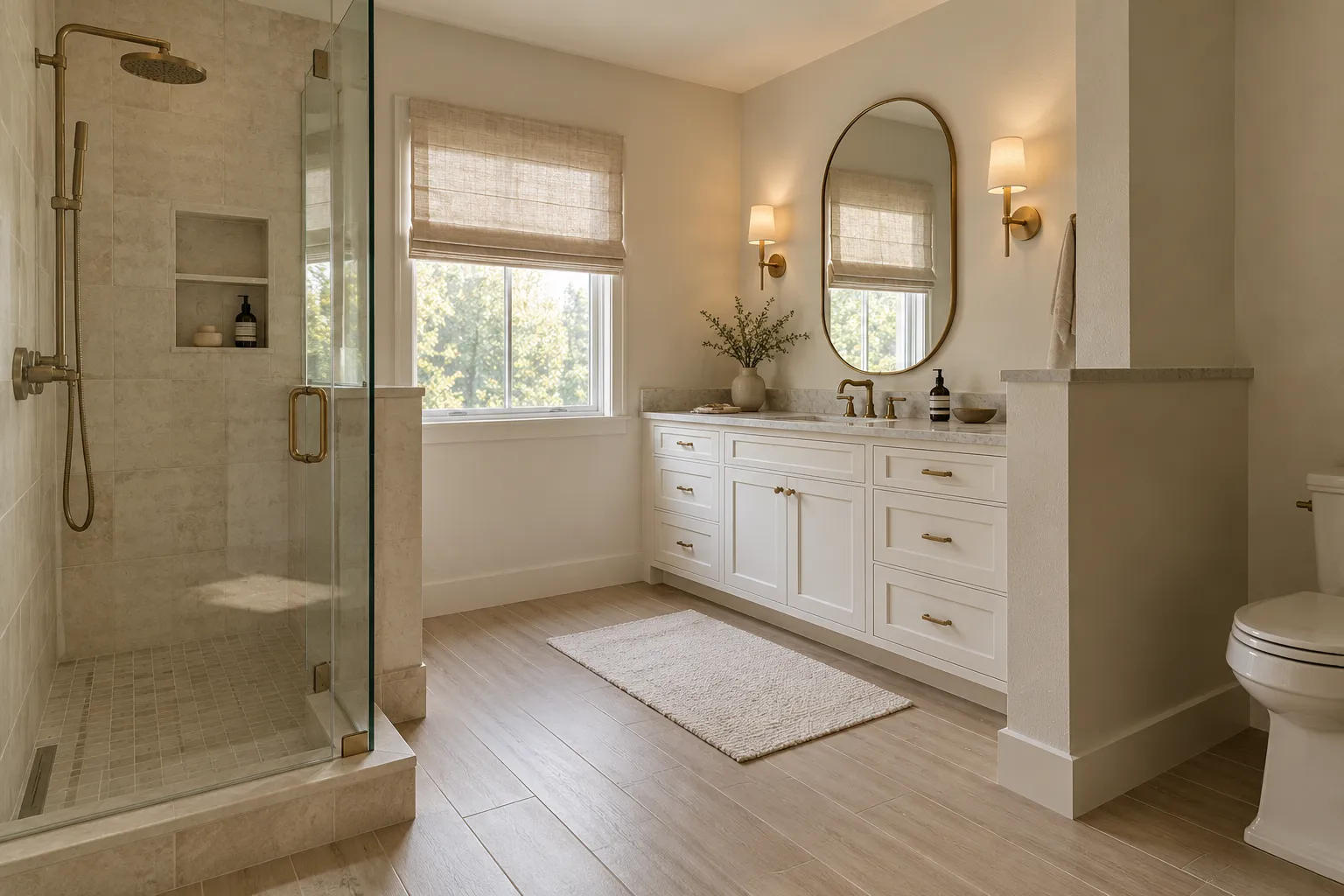
A tub to shower conversion in Scottsdale turns the tub space into a walk-in shower, with new waterproofing, tile and glass planned around the plumbing that is already there. To talk through your bathroom, call (747) 243-2089.
Last updated
01Showers
Why is a tub to shower conversion such a common change?
Converting a tub to a shower is a common change in Scottsdale bathroom projects, because the hardest parts are already in place. The space is already framed, plumbed and heated, and the footprint a bathtub occupies is generous for a walk-in shower. Much of the area's housing dates from the 1970s through the 2000s, and the tub in a guest or primary bathroom can be the original one from that era. Some households keep one tub and rarely use the second, so the conversion puts the room's largest fixture to daily use. The work usually stays inside the existing walls, which keeps the project focused compared with a full bathroom remodel.

02Tubs
What has to be checked before the tub comes out?
Before demolition, 2 things get checked: the drain and the valve. The drain often stays in a straight conversion, and its position sets the floor slope; whether it can move is a separate question, answered once the floor is open and the city has reviewed the plan. The valve has the same moment of truth, because the wall is about to be open anyway. The structure gets a look too. A Safety Insurance study on water damage (opens in a new tab) found homes 30 years old were 3 times as likely to have a plumbing supply or drainage problem, and a rarely used bathroom can hide a slow leak, so a conversion is a good moment to find it.
03Tubs
What does the rebuild involve once the tub is out?
Once the tub is gone, the alcove is rebuilt as a shower in a fixed order: framing and blocking, plumbing, waterproofing, tile, glass. The old surround comes off with the tub, and the walls return to a base suited to tile, with blocking added for a bench, a niche and any grab bars that may come later. The drain is reset and the new valve and trim are installed. An easy pick at that point: a WaterSense labeled showerhead (opens in a new tab), since showering is nearly 17% of residential indoor water use and labeled heads hold flow to 2.0 gallons per minute against 2.5 standard. Waterproofing covers the pan and walls before any tile is set, because tile and grout are the finish, not the waterproofing. Glass is templated after tile, and the room is finished, cleaned and handed back.

04Tile and waterproofing
Tile or a maintenance-light surround: which should you choose?
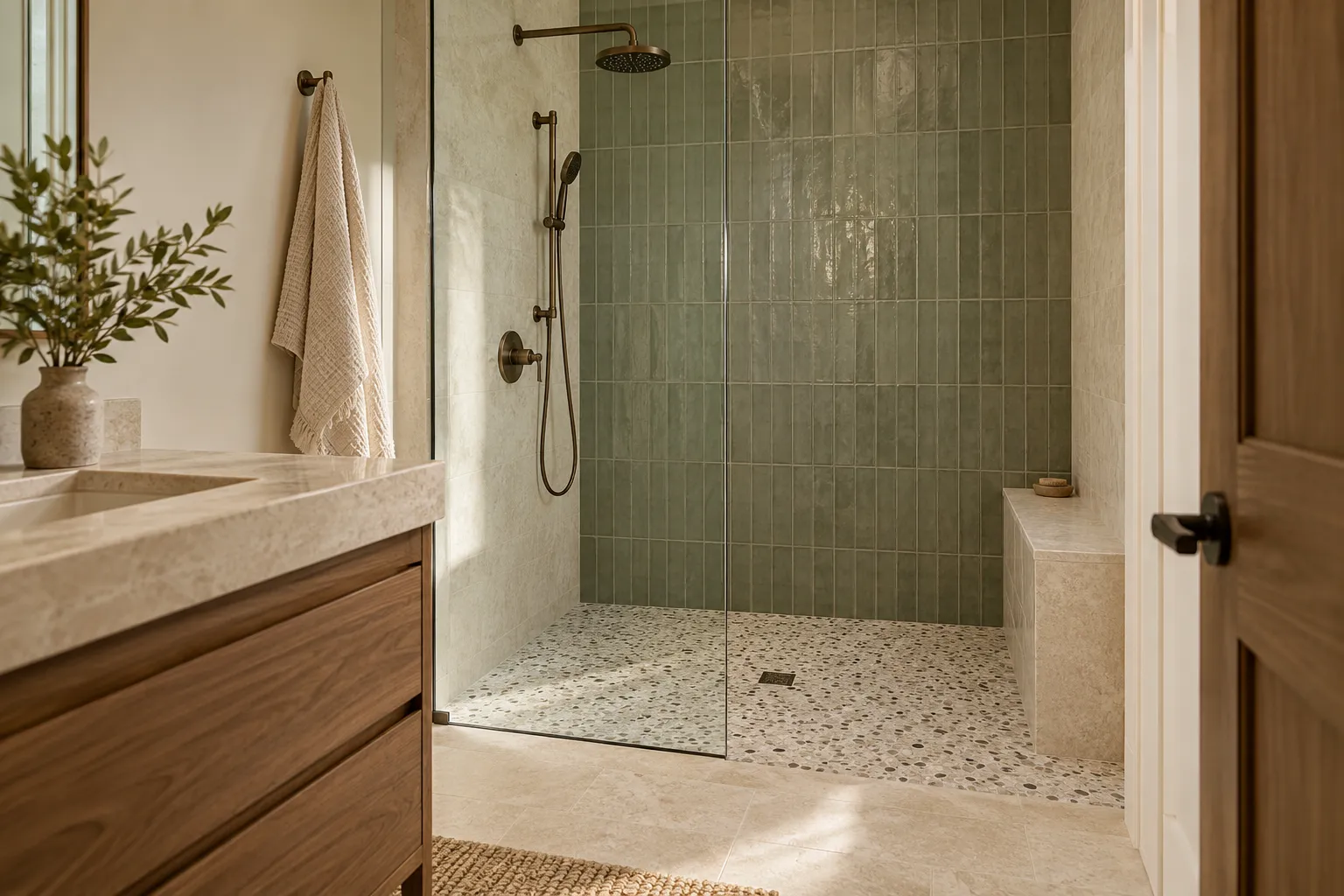
A tiled shower is the durable, considered answer: porcelain or natural stone over a waterproofed substrate, with care that amounts to a squeegee and the right cleaner. A prefabricated surround installs faster, wipes down easily and usually costs less, but it reads as a standard replacement rather than a designed shower, and its sizes and finishes come only in what the maker offers. A middle path is a tiled shower with a simple layout: larger tile, fewer grout lines, dimensions that do not strain the budget. In hard water, grout can be one of the first things to show its age, and a mid-tone or a stain-resistant grout keeps the difference smaller. Either way, what is behind the surface matters more than the surface.
05Showers
Glass or curtain: how do you close a converted shower?
Many conversions are closed with glass, because the opening a tub curtain served was shaped for a tub, and glass handles the spray a walk-in shower makes. Frameless glass is templated to the finished opening and held with minimal hardware; semi-frameless glass uses a frame or header and can cost less; both are fabricated after the template is taken. Sliding doors and hinged or pivot doors all suit a former tub alcove, and the opening width usually decides which fits best. A curtain is still an option on a tight budget, and it hides the tile, which is usually not the goal of a conversion. Glass is the last piece in, so a finishing gap after the tile is normal.
06Timeline
How long does a tub to shower conversion take?
A national cost guide says a tub to shower conversion can take as little as 2 days with a prefabricated shower that matches the old tub, and 1 to 2 weeks or longer for a custom conversion; the on-site work covers demolition and rebuild, then waterproofing, tile and grout with cure time between stages. The calendar around it can be longer. Frameless glass is fabricated after the tile is set, and special-order tile, fixtures or a vanity carry their own wait times. Cure days for pans and waterproofing cannot be compressed; the materials set on the manufacturer's schedule. The sequence is laid out up front and updated when materials land. Call (747) 243-2089 to talk through timing for your bathroom.
07Costs
What does a tub to shower conversion cost in Scottsdale?
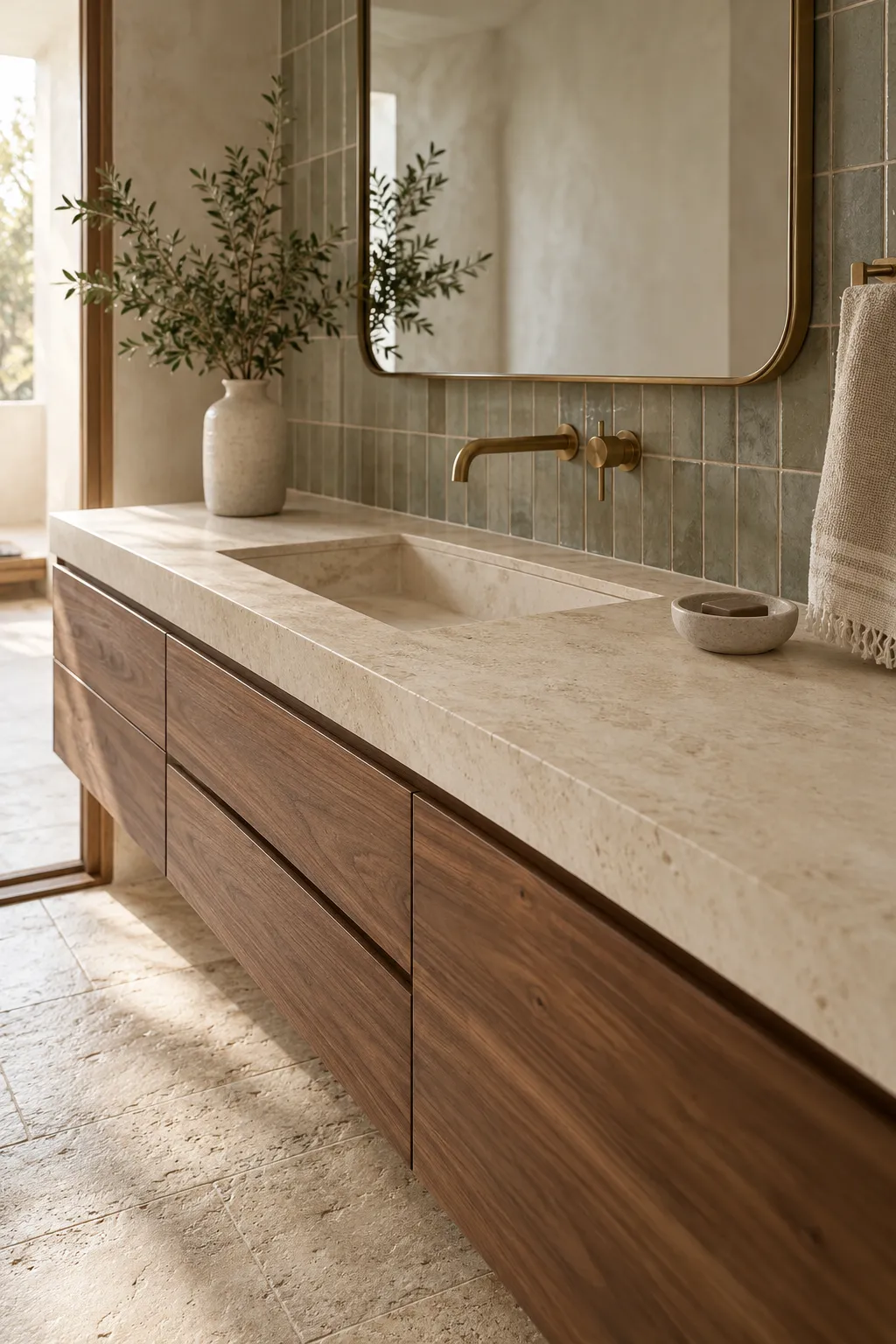
A national cost guide puts the average tub to shower conversion at $4,000, with most projects between $1,200 and $10,000 and high-end materials with custom installation reaching $20,000. The spread is wide because the work varies. A straight swap in the existing footprint with porcelain tile and a standard enclosure sits near the bottom; curbless construction, natural stone and a relocated drain push the number up. These are published market ranges, not quotes. The actual price is set after an on-site assessment.
08Tubs
When does keeping the tub make more sense?
If the household uses the tub, it stays. Families with young children, regular soakers, and homes that would be left with no bathtub at all are the usual cases, and an honest look at the past year of use settles most of them. When the tub stays and the goal is simply a better-working bathroom, a new tub and surround, or refinishing the existing tub, is a smaller scope with its own numbers. Either one keeps the drain and valve where they are. A walk-in tub is the option where stepping over a rim is the concern. For mobility questions, start with a doctor or an occupational therapist, and the room can be planned around what they advise. Either way, the decision comes back to daily use, not fashion.
09Permits
Does a tub to shower conversion need a permit in Scottsdale?
It depends on the scope: the City of Scottsdale (opens in a new tab) says single trade work such as replacing existing plumbing fixtures in the same location can use a Minimum Permit with no plan review, while construction, structural improvements, demolition, or adding or relocating mechanical, electrical or plumbing systems need a permit, and permits other than Minimum Permits begin with plan review. Fines equal twice the permit fee for skipped work, and an issued permit expires unless the first inspection happens inside 180 days. Applications go through the city's SPUR portal. The permit step belongs in the schedule before demolition rather than after it, and the city reviews and approves.
105 questions
Questions people ask
Still have a question? Call (747) 243-2089 and describe the bathroom.
01Can a conversion happen without moving the drain?
In many conversions the drain stays where it is and the new shower pan is built around it. Whether it can move is a question for the city's review once the floor is open, and a move adds cost and time when it is possible at all.
02What happens to the old tub and the tile?
Demolition covers the tub, the surround and the old tile, and the debris is hauled away. Once demolition is done, the room is ready for framing and the rebuild.
03Is a curbless shower possible where the tub was?
Sometimes, and the answer lives in the floor: a curbless pan needs enough depth in the floor build-up to slope to the drain, and the framing below the old tub decides what is possible. The floor framing and the city's review settle it after the floor is opened.
04How soon can the shower be used?
Glass goes in last, and membranes and mortars cure on the manufacturer's schedule; the shower is ready for daily use once the enclosure is set and the final stages are done.
05What changes in a condo conversion?
Condo bathrooms add coordination: shared shutoffs, shared walls and building work-hour rules can call for a conversation with the HOA or building manager before scheduling. The City of Scottsdale (opens in a new tab) notes that CC&Rs may govern some projects even though the city does not regulate them, and advises checking with the homeowners association before proceeding.
11Keep reading
Related
- Bathroom remodel services: full remodels, showers, tubs and vanities across Scottsdale.
- Shower remodeling: what a custom shower involves, from waterproofing to glass.
- Bathtub installation: for keeping a tub and upgrading it instead.
- What a bathroom remodel costs: published ranges behind every stage of the work.
- Bathroom remodeling in Old Town Scottsdale: small-space layouts and tub conversions in its older homes.
By area