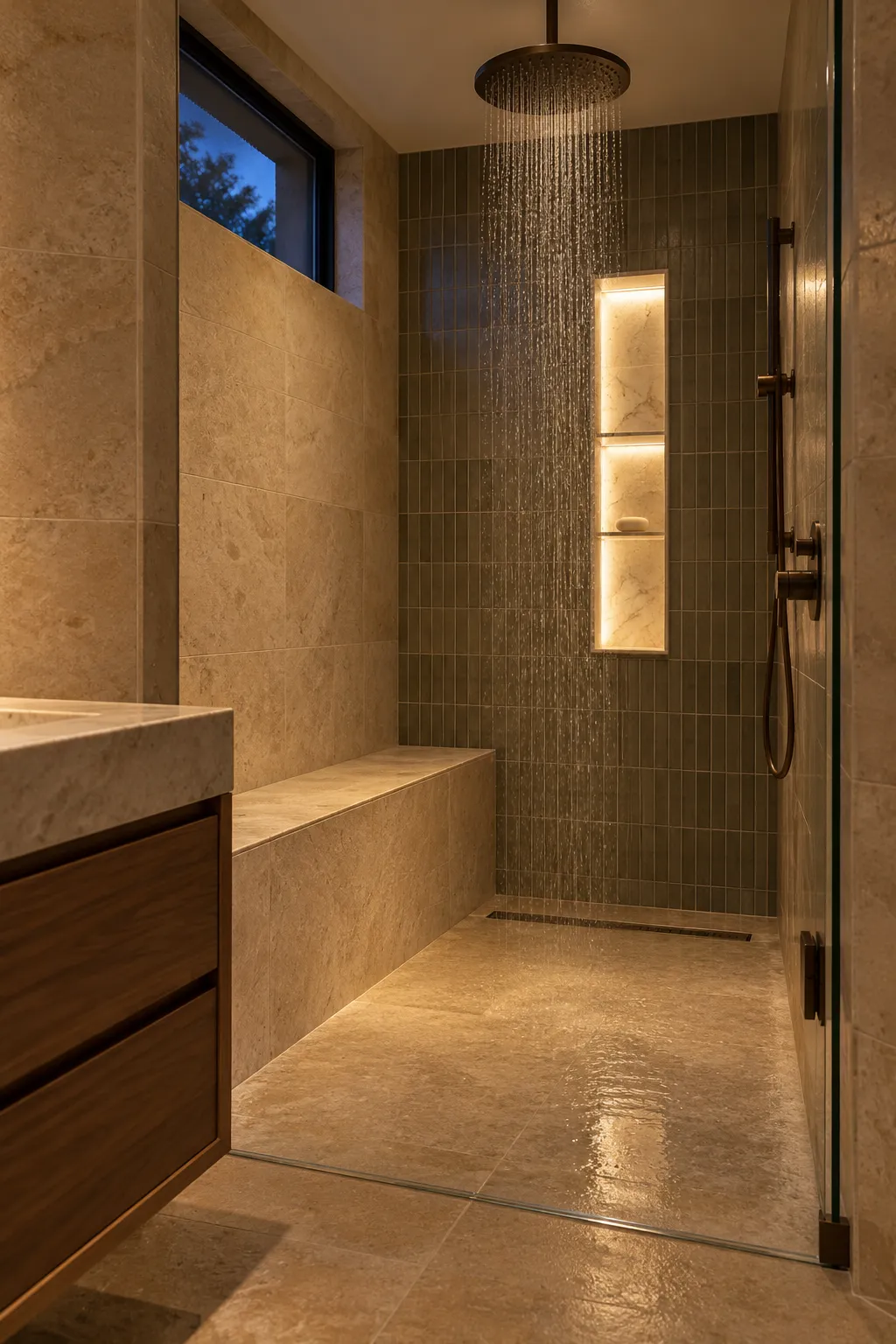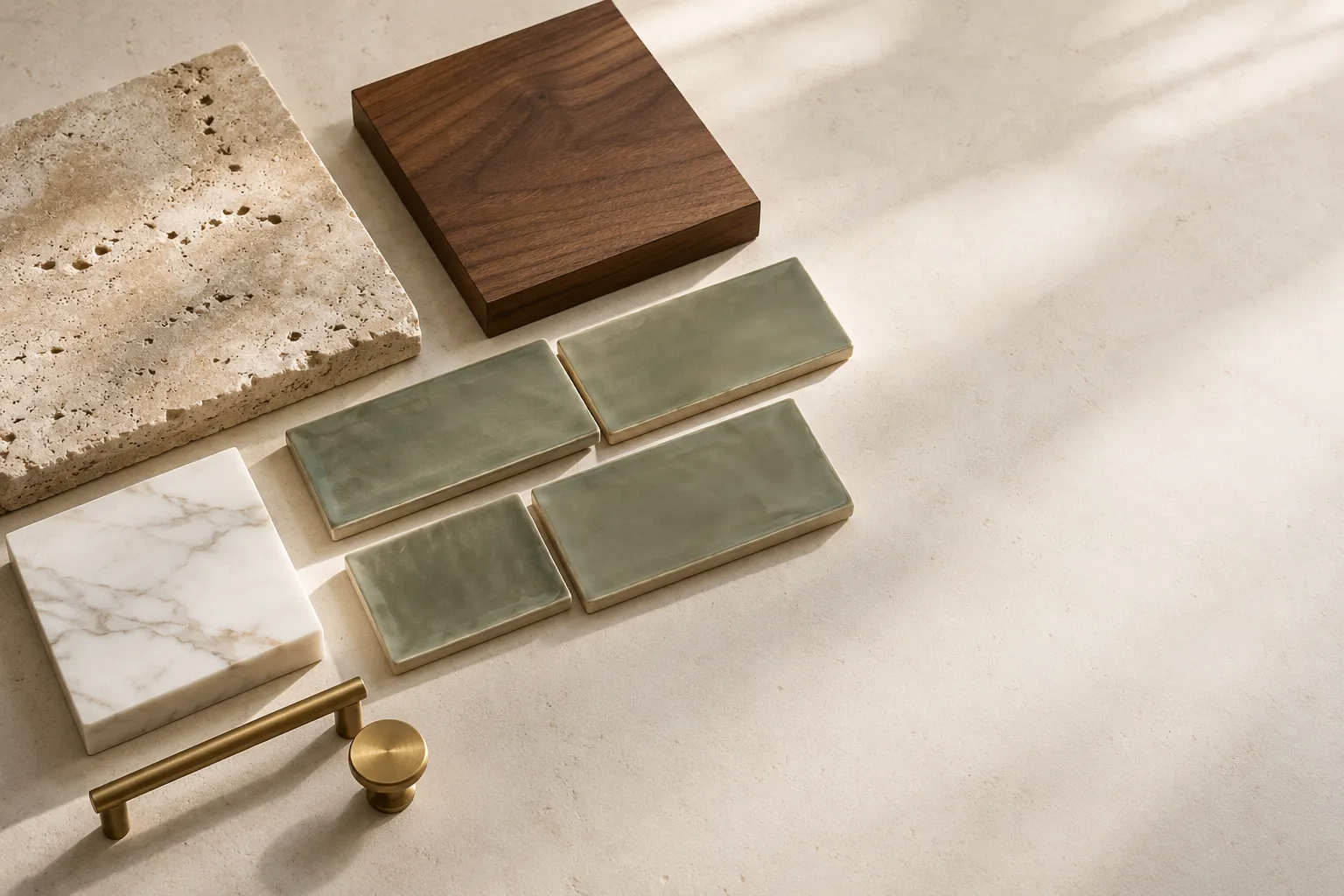
Service 06 of 07 · Scottsdale, AZ
Bathroom Vanity Installation in Scottsdale, AZ
Bathroom vanity installation in Scottsdale changes how a bathroom works every day: a cabinet, countertop, sink, faucet, mirror and lighting built as one piece and fitted to the room's plumbing and storage needs. To talk through sizes, materials and timing for your bathroom, call (747) 243-2089.
Last updated
01Vanities
What does bathroom vanity installation in Scottsdale involve?
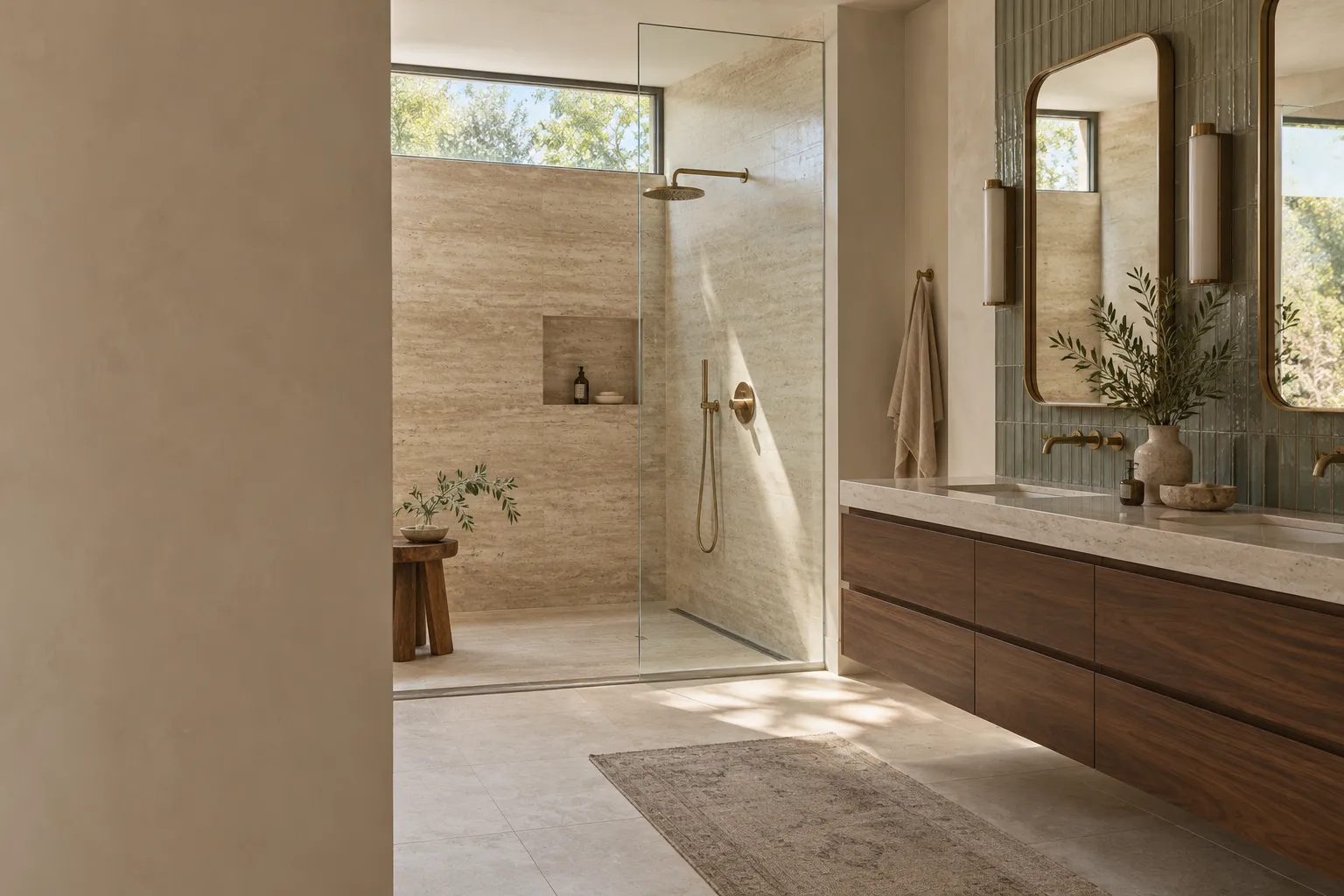
A bathroom vanity installation replaces the whole wash station: the cabinet, countertop, sink and faucet, and usually the mirror and lighting above them, along with the plumbing and electrical connections that serve them. The work starts with measurements and selections, then the old vanity comes out, the wall behind it is checked and repaired, the new cabinet is set and leveled, and the countertop, sink, faucet, mirror and lights follow. Scottsdale water runs hard, and the city's 2026 Water Quality Report (opens in a new tab) lists 13 to 17 grains per gallon north of Indian School Road, which is why scale can build up on faucets, drains and glass and why easy-clean surfaces earn their place. A new vanity can change how an older bathroom feels.
02Vanities
What size vanity fits my bathroom?
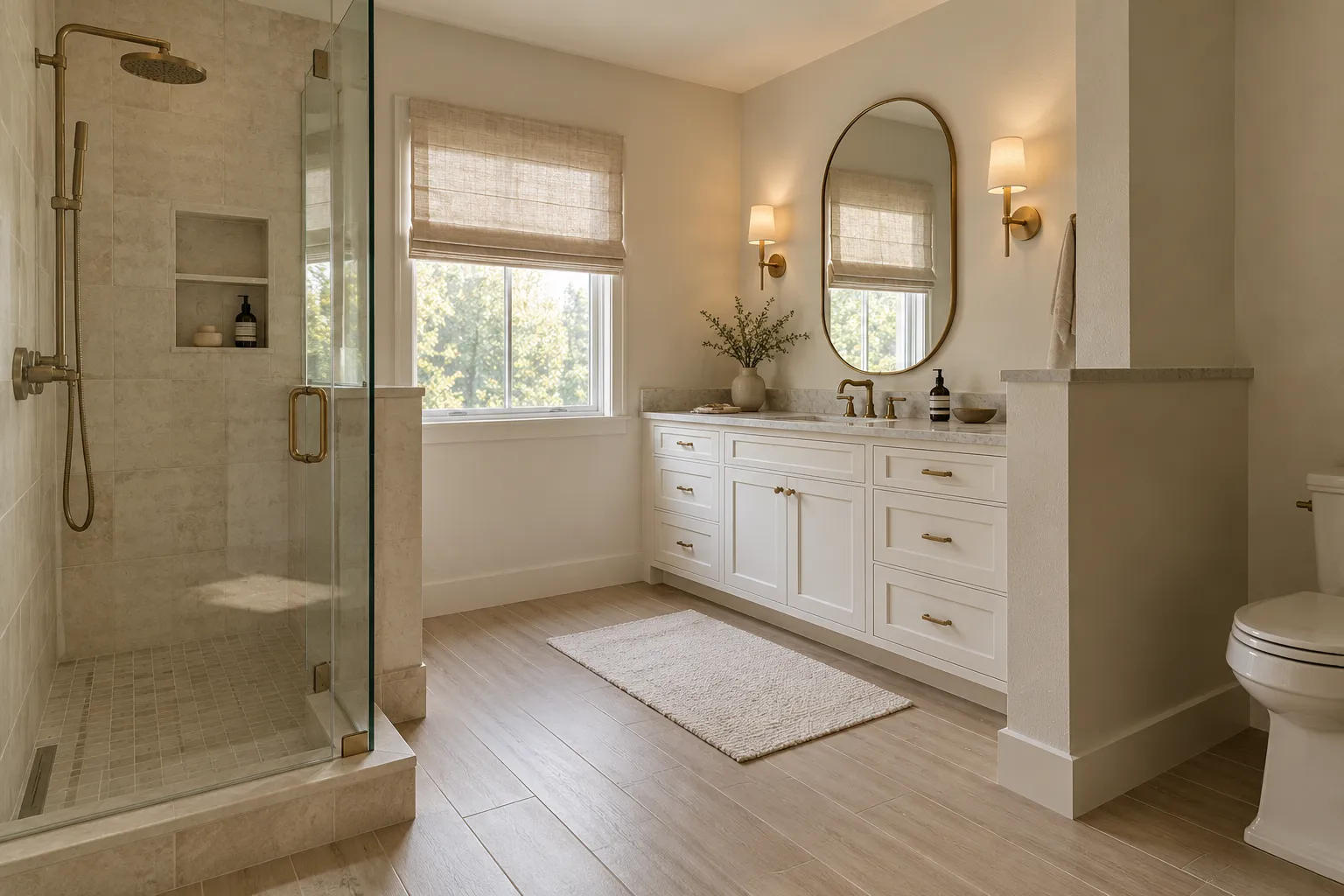
Vanity sizing starts with the wall. Measure the available wall, note where the toilet and the shower or tub sit, and check how doors and drawers would open; a vanity that crowds a doorway or blocks a shower door will annoy you every day. Powder rooms and small guest baths usually take a compact single vanity, while primary bathrooms can carry a wider cabinet with more storage. Counter space at the sink often matters more than a longer cabinet, because that is where the morning routine actually happens. Where the wall is tight, a shallower depth or a freestanding furniture style vanity keeps the floor feeling open without giving up the counter. The right size is the largest one the room allows without crowding.
03Vanities
Should I choose one sink or two?
Double sinks suit a household with a shared morning schedule; one sink wins when counter space, storage or the budget matter more. A double vanity needs a wider wall, and the second sink brings extra plumbing into the plan, which can complicate a smaller room. A single sink paired with generous counter and a bank of drawers often serves a primary bathroom better than 2 cramped stations. Think about the honest pattern: 2 people standing side by side every morning, or one person who wants room to spread out? Guest baths and powder rooms usually call for a single sink. Save the double for the room where it earns its keep, and give the rest of the space back to storage and surface.
04Vanities
Which countertop works best for a bathroom vanity?
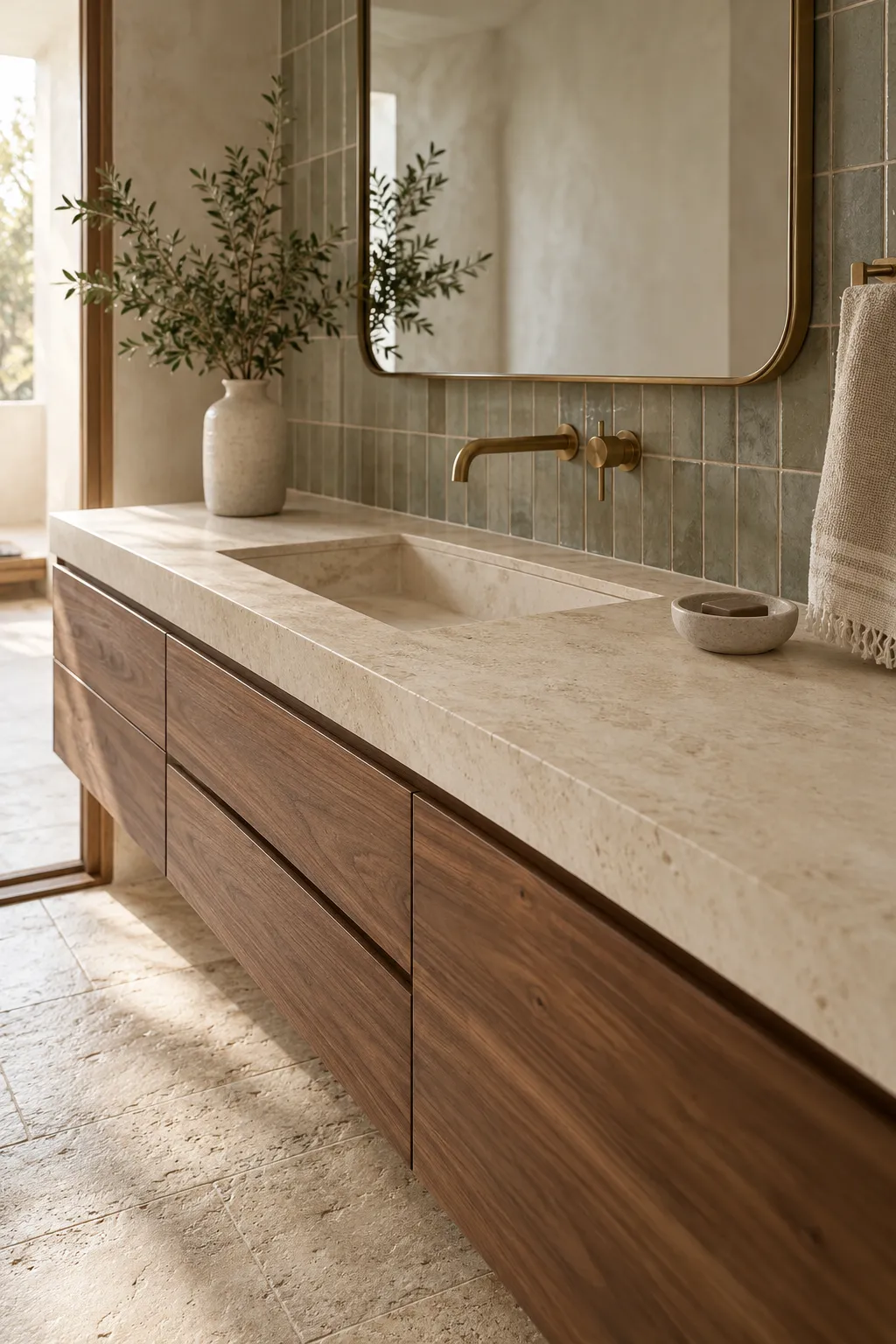
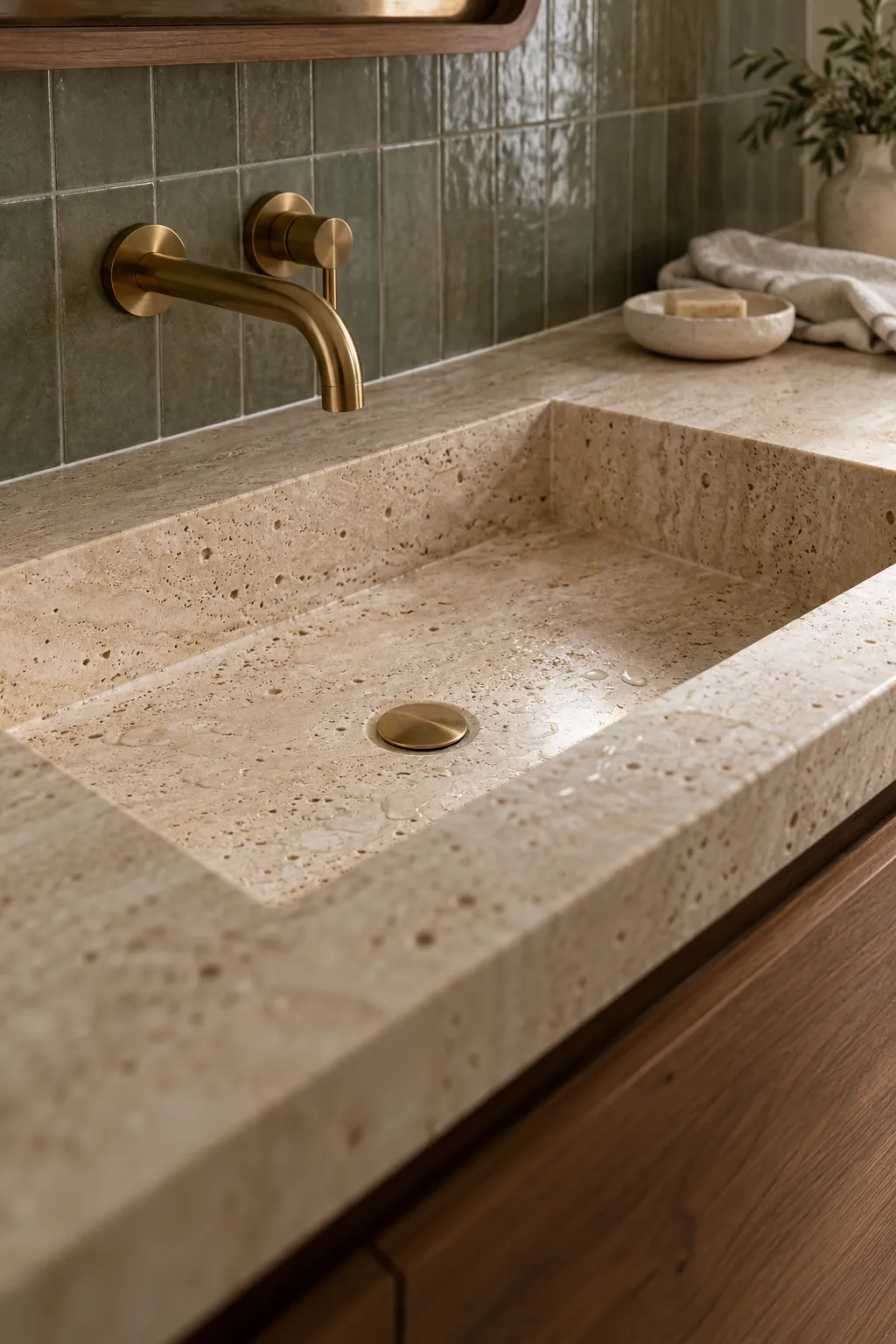
Porcelain and natural stone are 2 common directions for a vanity top, and both reward a little knowledge. Marble, travertine and limestone are calcareous, so acidic cleaners work against them; the Natural Stone Institute recommends mild, non-acidic products, and acids like lemon or vinegar can dull or etch the stone. Impregnating sealers make stone more stain resistant, not stain proof, so natural stone asks for a certain amount of care. Porcelain offers a dense surface that rinses clean with soap and water. Whichever route you take, choose the counter, sink, edge and backsplash as one decision, because the top is cut to the sink and fitted to the cabinet, and that fit is easiest to get right when the pieces are chosen together.
05Vanities
How should I plan storage around the vanity?
Plan storage around what actually lives in the bathroom, then match the cabinet to it. Deep drawers hold towels, hair tools and refills far better than a shelf behind a door, and a stack of drawers beside the sink beats one deep cavern beneath it. Medicine cabinets and mirrored storage absorb daily clutter; open shelves are for the few items worth showing. Receptacles at the vanity are GFCI-protected, and the layout should make them reachable without a tangle of cords across the counter. If walls are open for other work, extra blocking behind the vanity costs little and keeps future changes simple, from a heavier mirror to grab bars. Plan drawers, outlets and blocking as one decision, and the vanity does its job quietly.
06Vanities
What plumbing does a new vanity need?
Water, drain and vent set the limits, so the plumbing is mapped before anything is ordered. The existing supply lines and shutoff valves are checked while the wall is open, the rough-in is its own plumbing step, and any relocation is confirmed as possible before work starts. Moving a drain or a water line within the room adds cost. The actual price is set after an on-site assessment. A floor-mounted vanity reuses the existing rough-in on same-spot swaps, while a wall-hung vanity needs blocking and more planning inside the wall. Hard water is one more reason to get the details right now. Unsure what your plumbing can support? Call (747) 243-2089 before the cabinet is ordered.
07Vanities
How do mirrors and lighting pair with the vanity?
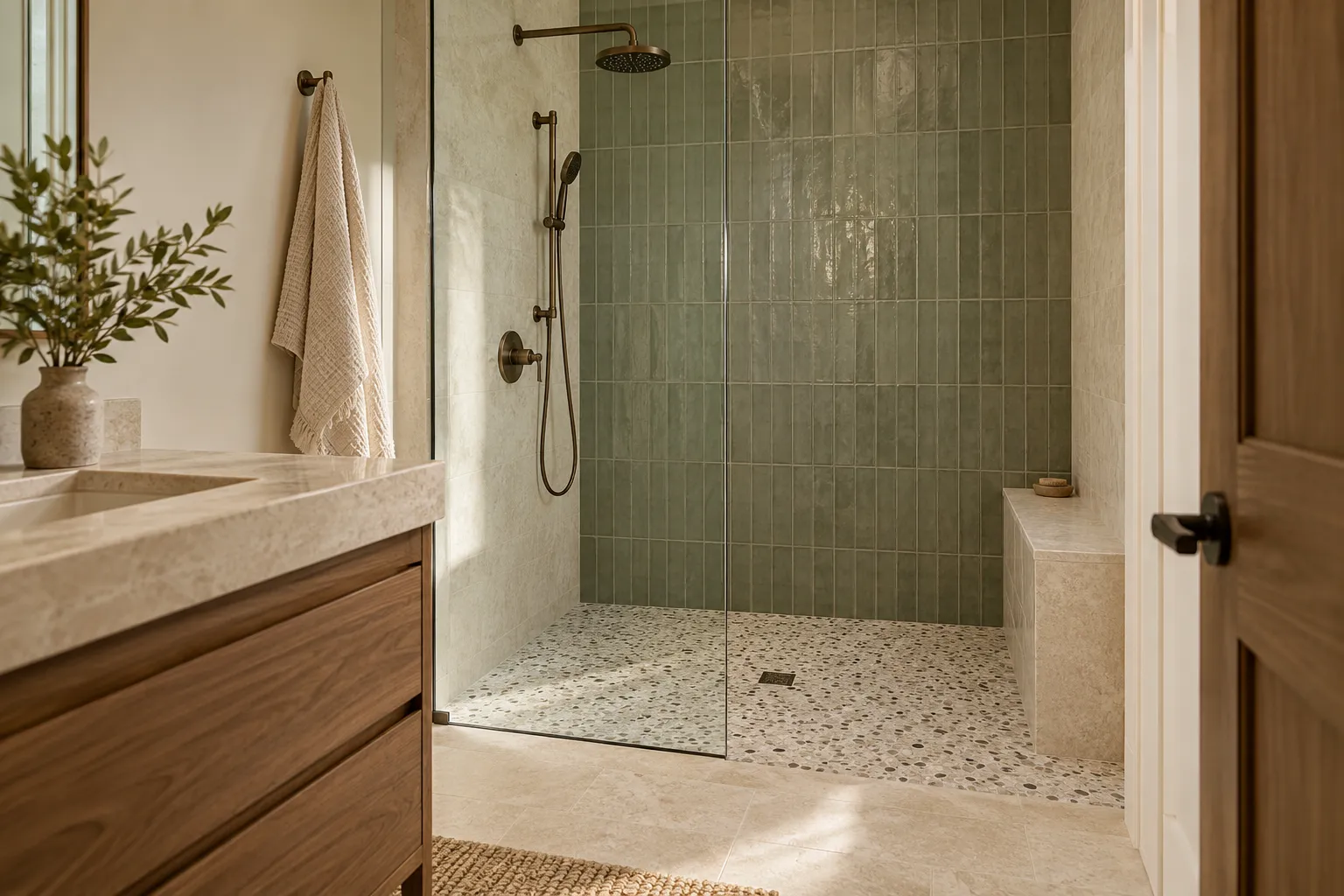
Treat the mirror and the lighting as part of the vanity, not as finishing touches. The mirror should relate to the cabinet below it, matching its width or sitting slightly narrower so the counter reads as one composition, and a medicine cabinet version adds storage at eye level. For light, layering beats one bright fixture: sconces or vertical fixtures beside the mirror light faces evenly, while ambient light fills the room. A dimmable circuit is worth the small extra cost, because morning and evening want different light levels. Fixture color should stay consistent with the rest of the house. Electrical work here includes GFCI protection for the outlets, and the plan is drawn during rough-in rather than patched in later.
08Costs
What does vanity installation cost in Scottsdale?
Published national ranges cover the main pieces of a vanity project:
- A floor-mounted vanity runs about $1,200 for a 60 inch cabinet, installed (a national cost guide)
- A wall-hung vanity runs $1,310 to $1,390 for a 60 inch cabinet, installed (a national cost guide)
- A vanity and countertop average about $1,200 in a bathroom remodel, from $300 for a small powder room vanity to $3,000 or more for high-end cabinetry (a national cost guide)
- A bathroom sink installation runs $500 to $1,000, averaging $750 (a national cost guide)
These are published market ranges, not quotes. The actual price is set after an on-site assessment. More published ranges for full bathrooms and individual scopes are on the bathroom remodel cost page.
09Vanities
Should the vanity be part of a full bathroom remodel?
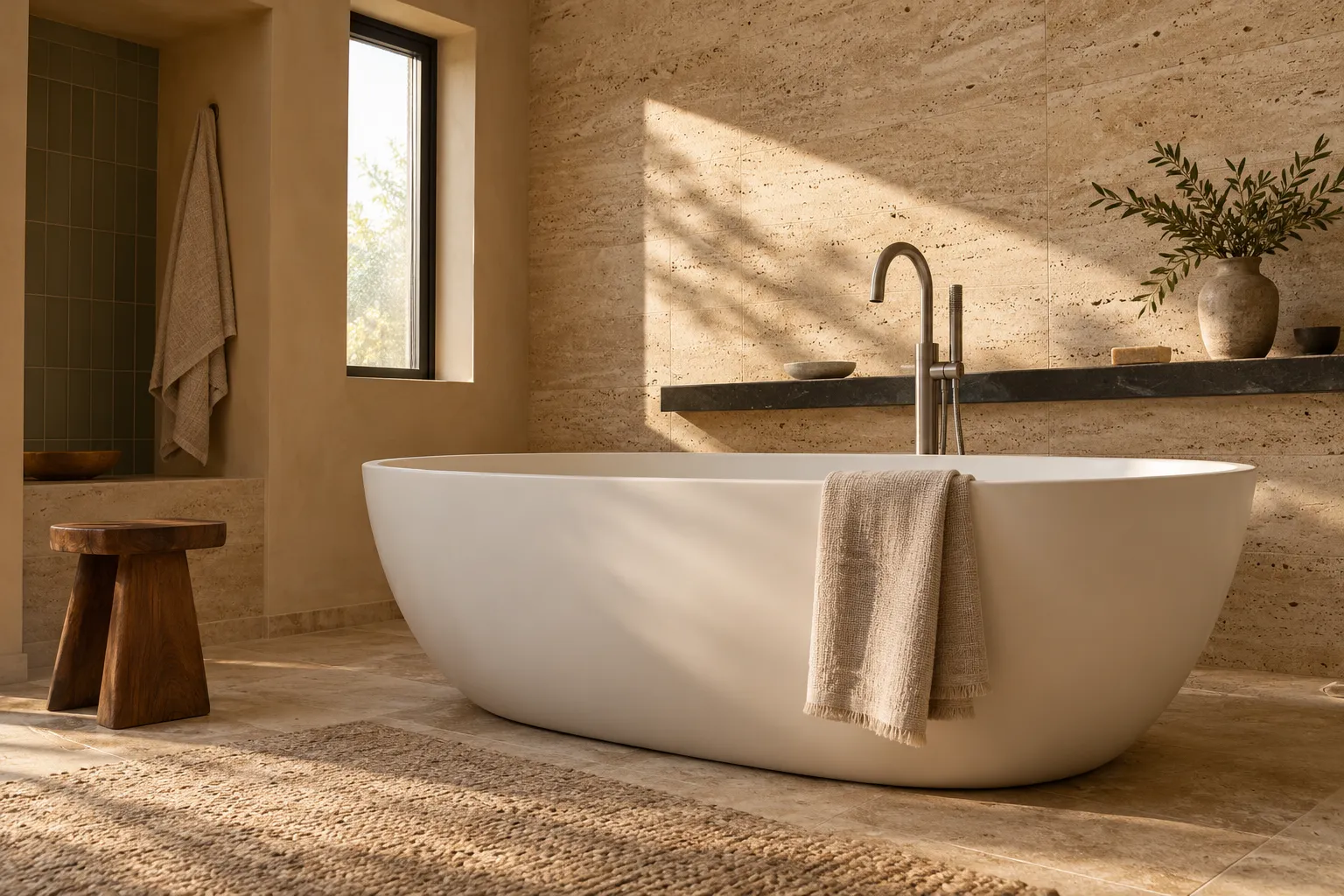
Often, yes: if the shower, floor, lighting or layout are changing too, the vanity belongs in one plan rather than a second project that reopens the room later. The vanity install itself is modest, but it touches everything around it: tile edges, paint, the electrical circuit and the drain line. The timing runs one direction: selections first, then orders, since cabinet and vanity orders can take several weeks and special order tile and fixtures go by line. Inside a full remodel, the work behind and around the vanity happens in the same pass, including shutoff valves, blocking, and any repair the old cabinet was hiding. For how the trades, permits and timeline fit together, see full bathroom remodeling, and for the shower side, see shower remodeling.
105 questions
Questions people ask
Still have a question? Call (747) 243-2089 and describe the bathroom.
01Can a new vanity go in the same spot as the old one?
Often, and staying put keeps the project simpler and the price lower, because the water and drain lines do not move. If the layout changes, what can be relocated is confirmed before cabinets are ordered. Either way, the cabinet is set and leveled before the countertop is measured and cut.
02How long does vanity installation take?
The long part is often the order, not the install. Vanity and cabinet orders can take several weeks, and special order tops and tile vary by line. Once the pieces are on site, the installation itself is a short phase of the project.
03Do I need a permit to replace a bathroom vanity?
It depends on the scope. The City of Scottsdale lists cabinets, countertops and similar millwork as work that needs no permit, while repair or replacement of existing plumbing fixtures in the same location falls under a Minimum Plumbing Permit, which has no plan review. Adding or relocating plumbing or electrical systems needs a permit, per the City of Scottsdale home improvement permit guidance (opens in a new tab). Work completed without a required permit is fined at double the permit fee.
04Wall-hung or floor-mounted: which should I choose?
A floor-mounted vanity is the simplest swap and a common choice, because the cabinet carries its own weight and reuses the existing plumbing. A wall-hung vanity opens up the floor and makes cleaning easier, but it needs blocking installed inside the wall to carry the load, plus more planning at rough-in time, and both styles last when the wall behind them is prepared properly.
05Can I keep my existing countertop?
Sometimes, if the new cabinet matches the old dimensions and the top is in good shape. But countertops are cut around the sink and fitted to the cabinet, so any change in size or sink means a new top, and many projects replace counter and cabinet together for that reason. A same-size swap is a case where reuse can make sense.
11Keep reading
Related
- Bathroom remodeling services: services for Scottsdale bathrooms, from showers and tubs to vanities and accessible updates.
- Full bathroom remodeling: how a complete remodel runs, from permits and waterproofing to tile and final inspection.
- Shower remodeling: walk-in, curbless and custom tile showers with frameless glass.
- Bathroom remodel cost: what full remodels, conversions and component upgrades run, with sources.
- McCormick Ranch bathroom remodeling: notes for 1970s and 1980s homes, where the original vanity may still be in place.