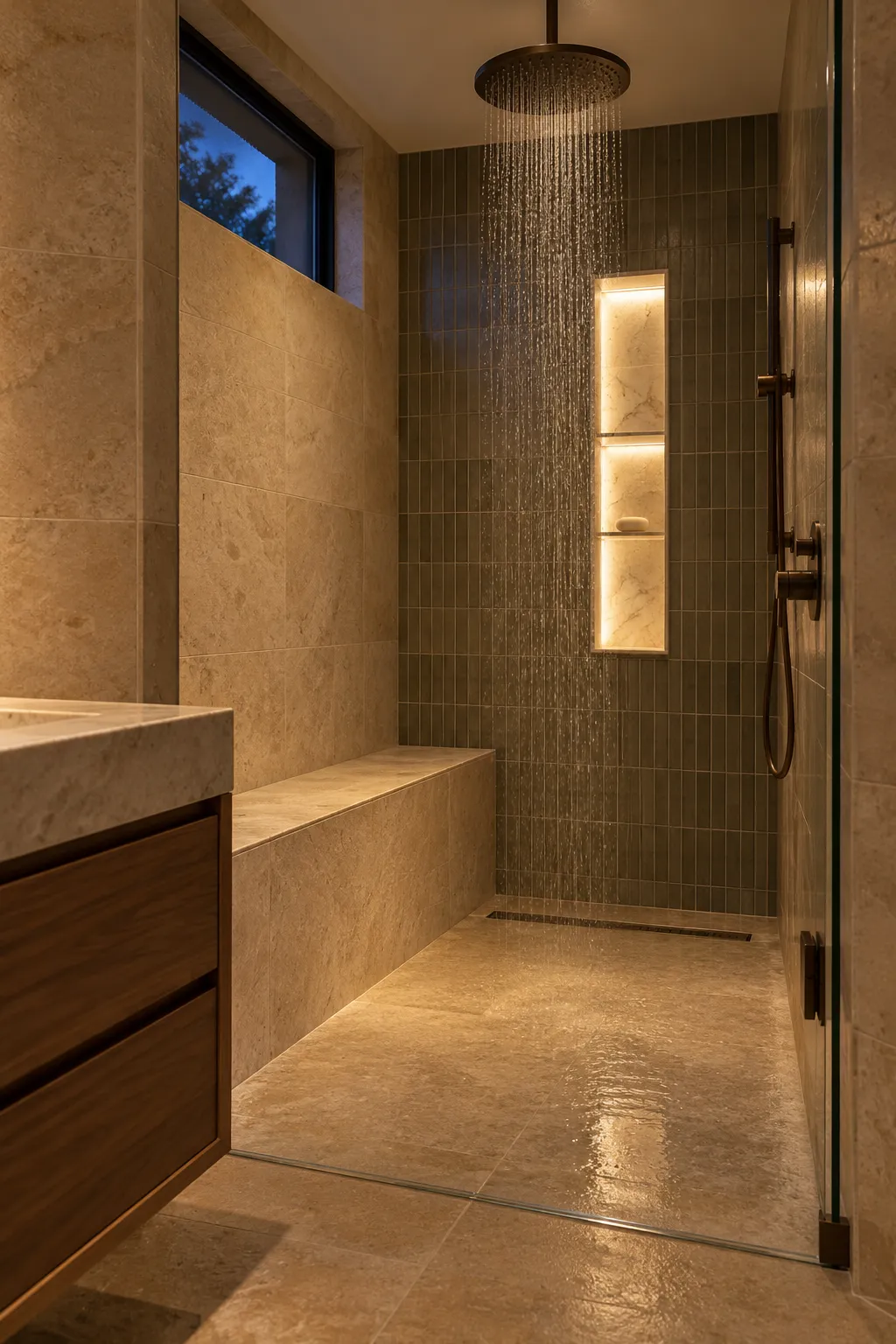
Guide 03 · 6 min read
Quartz vs Granite Vanity in Scottsdale, AZ
Good to know
The short answer
Granite is quarried stone cut and polished into a top; quartz is crushed stone bound in resin and pressed into slabs. Both sit on a vanity and both sell the room, but in Scottsdale the hard water and the heat treat them differently, and the difference decides which one still looks right in five years.
Quartz resists stains and scale better and asks for nothing; granite takes heat and resists scratches better and asks to be sealed. In a Scottsdale primary bath where water sits on the top daily and hair tools run hot, quartz is the safer default, and granite is the pick when the natural stone look matters more than the maintenance.
Which one is right depends on the water, how the vanity gets used, and what you are willing to maintain.
Good to know
Granite: what it actually is
Granite is stone, full stop: quarried, sawn, and polished. It is porous enough to drink oil and water at the surface, which is why tops get sealed, and hard enough to shrug off a hot tool set on it by accident. The color runs through the full thickness, so a chip is less visible than it is on an engineered top, and every slab is one of a kind.
Granite's porosity is also why the sealer choice matters: a sealer sits in the pores and wears on the cleaning schedule, and in hard water the schedule is shorter, because the film on top invites more scrubbing, and the scrubbing is what wears the sealer out.
The tradeoff is that granite is a maintenance material. The sealer wears, the stone takes on whatever sits on it in the meantime, and polishing a dulled spot back to match the rest of the slab is real work. The same porous versus sealed logic drives the porcelain vs ceramic tile decision elsewhere in the bath.
Good to know
Quartz: what it actually is
Quartz is engineered: crushed quartz stone, a resin binder, and pigment, pressed into slabs in a factory. The resin closes the surface, which is why quartz does not need sealing and does not drink stains the way granite does. The color is consistent from slab to slab, and the look is whatever the factory decided, not whatever the quarry produced.
The same closed surface is why quartz shrugs off the mineral film that dulls granite: the scale sits on top of the resin instead of in the pores, and a wipe lifts it. That is the entire quartz pitch in one sentence, and in Scottsdale it happens to be true.
The tradeoff is heat and seams. The resin softens under a hot pan or a curling iron left face down, and a burn mark on quartz cannot be sanded out the way stone sometimes can. Seams on a long vanity show more on a busy patterned stone than on a consistent one.
Good to know
Where granite fails here
Granite fails at the water line, and Scottsdale water is aggressive at the water line. The minerals in the water settle on the polished surface around the faucets and the soap dish, the film builds, and on a dark polished slab it reads as a white haze that ordinary cleaning does not lift. Acidic cleaners make it worse: vinegar and lime removers eat the polish along with the scale, and the top dulls in patches.
The resealing itself is the other Scottsdale cost nobody lists. It is not expensive as a material, but it is a recurring appointment, and in a second home the appointment happens on the owner's travel schedule, which is why so many granite tops in closed-up houses look ten years older than the granite next door that gets wiped weekly.
The second failure is the sealing cycle. Granite wants resealing on a schedule, and a second home that sits empty through the monsoon goes through wet and dry cycles in a room that gets no attention, so the sealer degrades between visits and the stone drinks whatever pooled on it while the house was closed.
Good to know
Where quartz fails here
Quartz fails at heat and at the seams. A primary bath in Scottsdale sees hot hair tools daily, and the resin binder in quartz softens under direct heat; a curling iron left face down leaves a scorch that is permanent. The tradeoff shows most on the vanities with built-in outlets and heater drawers, where the hot zone is exactly where the tools live.
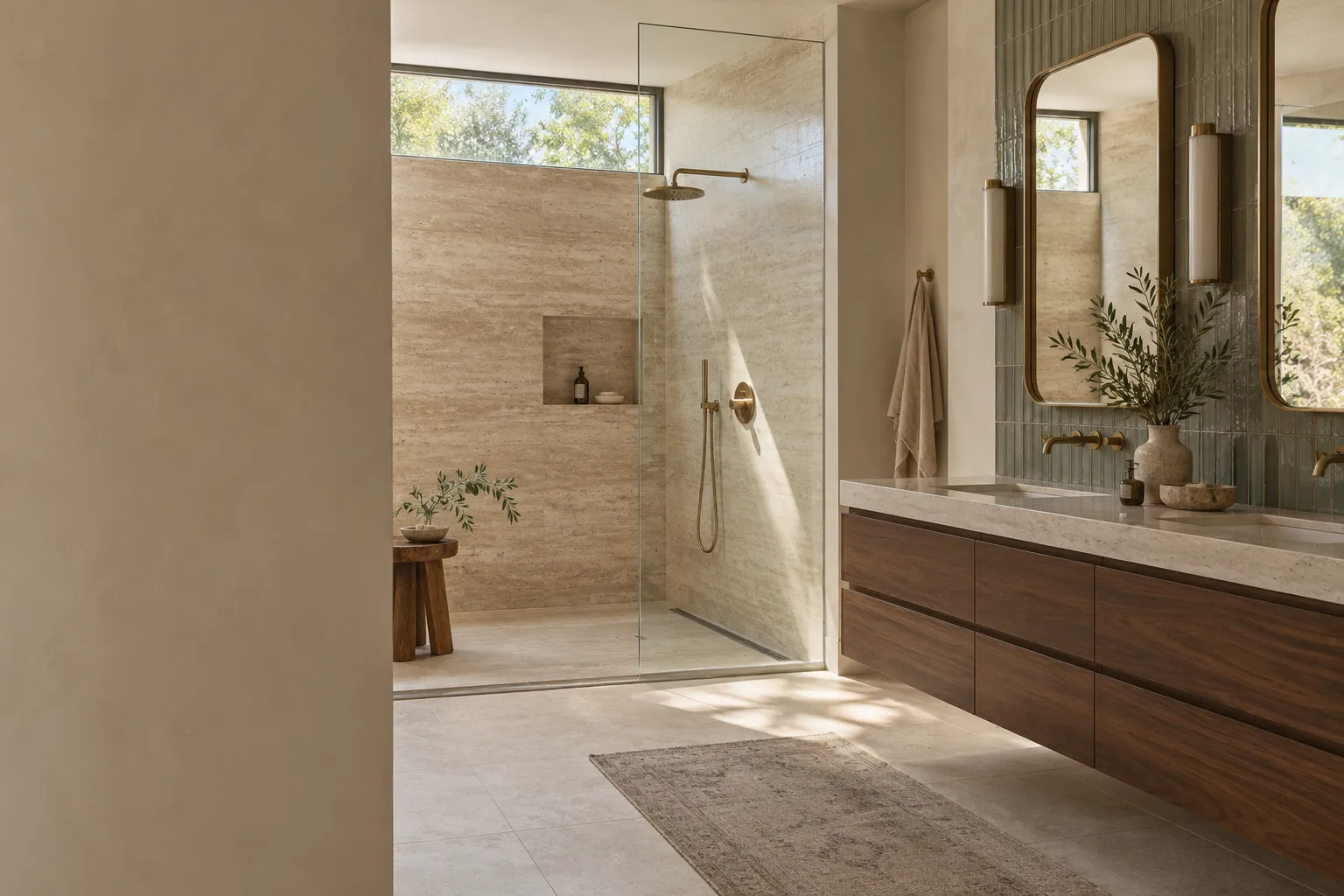
Seams are the quieter issue. Long double vanities in larger Scottsdale primary baths need seams, and on a solid color the seam is a visible line that catches scale and soap film. The fix is layout, not material: where the seam lands decides whether it disappears or collects crud.
A scorch next to a heater drawer is a planning failure, not a material failure, and it is why the tool tray goes in the vanity spec at the same meeting as the slab. Whether the vanity even changes at all is the question on remodel vs refresh.
Costs
What it costs and what drives the number
Both materials vary by slab, and the number moves with the size of the vanity, the edge profile, the faucet holes, and the undermount sink work. Granite and quartz are close enough in price at the slab level that the material is rarely the deciding line item; the fabrication and the install are. Where the two part ways is after the install: granite carries a resealing routine, quartz carries none.
The Scottsdale driver is the double vanity. Larger primary baths mean longer tops, which means seams and fabricator work, and that is where the number grows. The rest of the room's cost drivers are on the bathroom remodel cost page.
The edge profile is the line item people forget, because the edge is where the fabrication hours go, and a double vanity with two undermount sinks is four edges, not one. The fabricator's number is the one that matters, and it moves with the seams, the sinks, and the faucet holes, not with the slab's marketing name.
Good to know
What good work looks like in Scottsdale
- The top gets specced for the water and the tools in the room, not for the showroom lighting, so the finish choice survives the daily film.
- Seam locations get planned with the sink and faucet layout before the slab is cut, so the seam does not sit under the soap dish.
- The faucets and the drain trim get chosen with the stone, because hard water scale shows on the finish of both before it shows on the top.
- The whole bath gets a written scope and a flood-tested shower before the vanity goes in, so the stone is not installed over a leak in progress.
If you are ready to pick a top, our bathroom vanity installation page covers vanity work and costs.
6 questions
Quartz vs Granite Vanity: your questions
Still have a question? Call (602) 782-5702 and describe the bathroom.
Is quartz or granite better for a bathroom vanity?
Quartz is the lower-maintenance pick: it does not need sealing and it resists the mineral film. Granite wins on heat tolerance and the natural look. In Scottsdale water, quartz is the safer default.
Does granite stain in a bathroom?
It can, if the sealer is worn and something sits on it. Hair oil, soap scum, and hard water minerals all settle on polished granite, and the fix is cleaning plus resealing on a schedule.
Can you put a hot curling iron on quartz?
No. The resin binder softens under direct heat, and the mark is permanent. A trivet or a tray is cheaper than a new slab.
Does hard water etch granite?
The water itself leaves a mineral film, and the acid cleaners people use to remove it are what dull the polish. The haze is scale, and the dull spots are the cleaners.
Do quartz seams show?
On solid colors, yes, if the fabricator did not plan them. On a busy pattern, a good seam disappears. Where the seam lands matters more than the brand of slab.
Which resells better in Scottsdale?
Both read as high-end here, which is the point. The resale difference is condition: a granite top with a dulled waterline reads as tired, and a quartz top with a scorch reads the same.